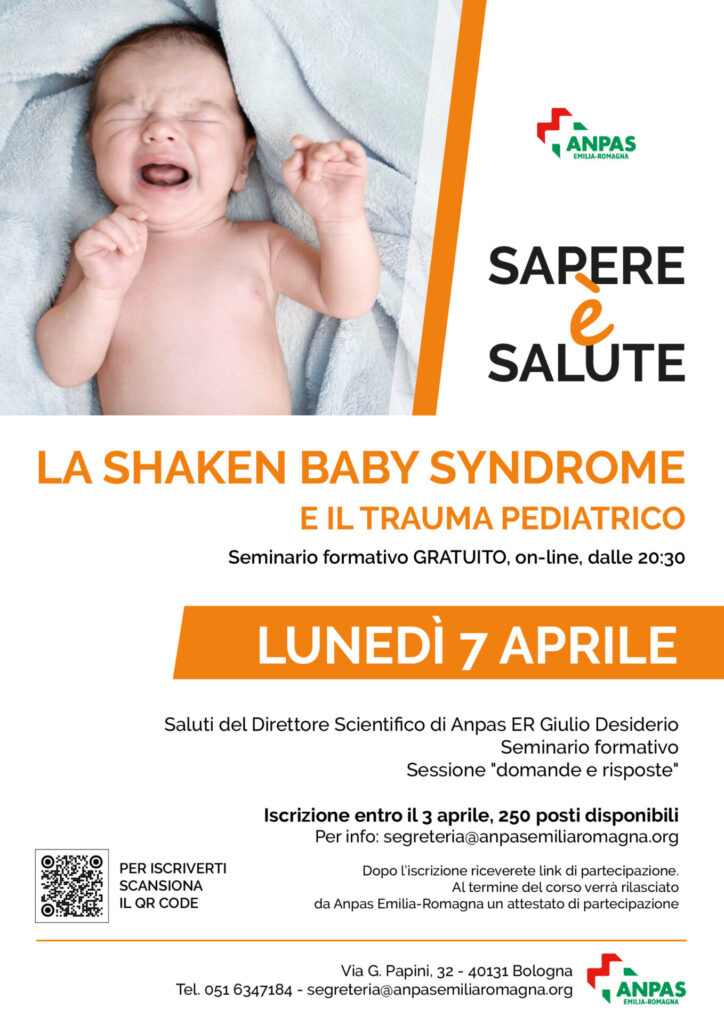
On April 7, on the occasion of World Shaken Baby Syndrome Day, an online course open to everyone to learn about this dangerous childhood trauma.
Shaken baby syndrome is a condition that is still relatively unknown outside the healthcare and emergency services sectors, but it has a significant incidence: between 16 and 38 cases per 100,000 infants. It is a syndrome linked to secondary behavior caused by stress and exasperation in some parents, who are often unaware of the serious trauma, even long-term, that they can cause their children. Now Anpas Emilia Romagna, a network of 109 public assistance organizations from all the provinces in the region, has organized an important online course open to everyone as part of the Sapere è Salute (Knowledge is Health) project, which promotes a series of information and training initiatives to increase the level of knowledge of adults and educators, primarily parents but also grandparents and other family members, about pediatric first aid. The online event is scheduled for Monday, April 7, at 8:30 p.m. You can register using the form at https://forms.gle/BKHUFzGXEY3UhxP1A, which can also be easily accessed through the Anpas Emilia Romagna Facebook page. Once registered, you will receive a link to participate in the course, and at the end, you will receive a certificate of participation. The training evening will feature a presentation by Giulio Desiderio, Scientific Director of Anpas Emilia Romagna, and an interactive question and answer session with participants. The event is limited to 250 participants, so be sure to register soon.
Dr. Cristiana Madoni and Dr. Giulio Desiderio of the Scientific Directorate of ANPAS RER explain: “Shaking a baby is generally a response to ‘inconsolable’ crying, the meaning of which adults often fail to understand. Feeling helpless, they may unconsciously resort to inappropriate behaviors such as shaking in an attempt to calm the infant. The peak incidence of shaken baby syndrome occurs between 2 weeks and 6 months of age, when infants cry most intensely and their heads are not yet fully controlled and their bone structure is still very fragile. If the crying does not stop and becomes truly inconsolable, the best thing to do, if you are alone and unable to cope, is to leave the baby in a safe place (cot or crib) and walk away until you have regained some degree of composure.
Alternatively, you can ask other family members and/or friends for help and, in more serious cases, arrange for a doctor to visit the child if you have any concerns about their health.
The prevention of all forms of child abuse or maltreatment in general, and SBS in particular, can be achieved through the use of various tools, including training courses for parents on infant crying, to learn how to recognize and manage it. In this area, there are active organizations such as the Terre des Hommes association, but also other scientific societies.
Greater public awareness is essential, as is a support and relief plan for families and parents who have difficulty caring for their newborns and/or infants.
Another preventive measure is for the other parent to implement de-escalation techniques when the child is upset. For example, the parent who is less tired or more predisposed to do so takes charge of managing the crying.
Luciano Francesconi, Anpas Emilia Romagna representative for the Sapere è salute (Knowledge is Health) project, adds: “April 7 is World Shaken Baby Syndrome Day, and we decided to launch this initiative because it is a very important issue that is still not widely known. We invite all parents of young children to participate, because knowing about, preventing, and recognizing this type of trauma is not so straightforward. Inappropriate behavior can seriously damage the brain. Unfortunately, there are cases that are fatal for young children, but others cause neurological deficits that become apparent during growth, including learning disorders, physical disabilities, visual impairment, and hearing impairments. With this initiative, we would like to educate and raise awareness on the subject; stress and fatigue are enemies that parents must pay attention to, tackle together, and seek help if they feel they are experiencing a nervous breakdown, because these traumas are most often caused unintentionally. The prevention activities on Shaken Baby Syndrome are therefore added to the other initiatives that the Sapere è Salute project has been carrying out for some time on pediatric first aid, allergies, and domestic accidents.